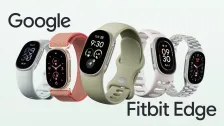
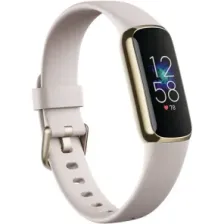
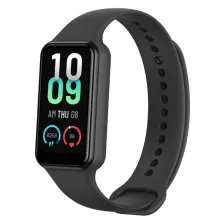
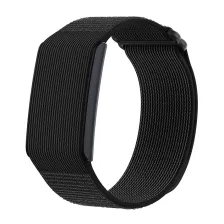
Choose a type to see its models. Counts include models without a ranking place.
The ranking · 119 devices
Heart rate trackers by type
The number beside a model is its place among all ranked devices of its type, including those without this feature. Open a model for its sources, costs and history.
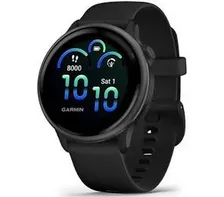
Feature descriptions still missing: Garmin Venu 2 Plus and Withings ScanWatch Nova — they list heart rate, and we have not recorded their makers’ explanations yet.
Across categories · 56 ranked in this comparison
Overall ranking: devices listed for heart rate
Places come from the overall ranking and can have gaps. Open a model for its feature sources.
Scroll across for source details.
General reputation across categories · human channels only
Rapidly flashing green LEDs read the change of blood volume in the capillaries of the wrist, photodiodes measure it, and infrared light tells the device it is being worn.
Google asks for the band a finger’s width above the wrist bone, snug but not tight — a tight band restricts blood flow and can affect the signal.
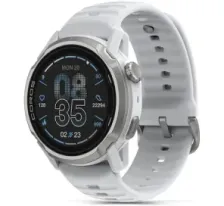
A PPG sensor lights the skin of the wrist and reads what comes back; four built-in algorithms — running, cycling, swimming, interval — sift arm motion out of the signal.
COROS calls the reading an estimate of effort and recommends a chest strap or armband for heart-rate-based training.
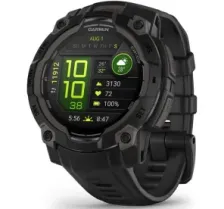
An optical sensor on the back of the case reads the pulse at the wrist; Garmin asks for a snug fit above the wrist bone so the watch cannot shift while you run.
The manual points at garmin.com/ataccuracy for accuracy and gives no figure of its own.
Light into the wrist measures how much blood is circulating: the more of it comes back, the lower the rate.
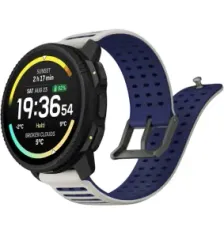
Suunto: the readings are estimates for reference and recreational use, not for medical use of any kind; it puts the best wrist sensors within 5% of a chest strap 90% of the time.
An optical sensor on the back of the case reads the pulse at the wrist; Garmin asks for a snug fit above the wrist bone so the watch cannot shift while you run.
The manual points at garmin.com/ataccuracy for accuracy and gives no figure of its own.
An optical sensor on the back of the case reads the pulse at the wrist; Garmin asks for a snug fit above the wrist bone so the watch cannot shift while you run.
The manual points at garmin.com/ataccuracy for accuracy and gives no figure of its own.
An optical sensor on the back of the case reads the pulse at the wrist; Garmin asks for a snug fit above the wrist bone so the watch cannot shift while you run.
The manual points at garmin.com/ataccuracy for accuracy and gives no figure of its own.
A PPG sensor lights the skin of the wrist and reads what comes back; four built-in algorithms — running, cycling, swimming, interval — sift arm motion out of the signal.
COROS calls the reading an estimate of effort and recommends a chest strap or armband for heart-rate-based training.
An optical sensor on the back of the case reads the pulse at the wrist; Garmin asks for a snug fit above the wrist bone so the watch cannot shift while you run.
The manual points at garmin.com/ataccuracy for accuracy and gives no figure of its own.
An optical sensor on the back of the case reads the pulse at the wrist; Garmin asks for a snug fit above the wrist bone so the watch cannot shift while you run.
The manual points at garmin.com/ataccuracy for accuracy and gives no figure of its own.
Light into the wrist measures how much blood is circulating: the more of it comes back, the lower the rate.
Suunto: the readings are estimates for reference and recreational use, not for medical use of any kind; it puts the best wrist sensors within 5% of a chest strap 90% of the time.
An optical sensor on the back of the case reads the pulse at the wrist; Garmin asks for a snug fit above the wrist bone so the watch cannot shift while you run.
The manual points at garmin.com/ataccuracy for accuracy and gives no figure of its own.
LEDs on the back shine through the skin and a photodiode reads the light that bounces back; a second sensor reads the movement of the hand, and an algorithm combines the two.
Polar names the watches this applies to one by one and asks for constant skin contact, a finger’s width above the wrist bone.
An optical sensor on the back of the case reads the pulse at the wrist; Garmin asks for a snug fit above the wrist bone so the watch cannot shift while you run.
The manual points at garmin.com/ataccuracy for accuracy and gives no figure of its own.
Rapidly flashing green LEDs read the change of blood volume in the capillaries of the wrist, photodiodes measure it, and infrared light tells the device it is being worn.
Google asks for the band a finger’s width above the wrist bone, snug but not tight — a tight band restricts blood flow and can affect the signal.
An optical sensor on the back of the case reads the pulse at the wrist; Garmin asks for a snug fit above the wrist bone so the watch cannot shift while you run.
The manual points at garmin.com/ataccuracy for accuracy and gives no figure of its own.
LEDs on the underside of the strap light the capillaries and a photodiode between them reads the light that is not absorbed; the change pulse by pulse gives heart rate and its variability.
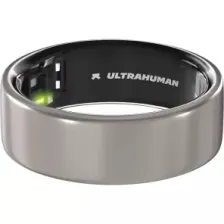
A PPG sensor on the inside of the ring reads the pulse from the finger; Ultrahuman publishes its own overnight comparison instead of describing the optics.
Ultrahuman’s own study puts the mean absolute error at 2.4 to 2.6 beats per minute against an FDA-cleared device and an Apple Watch.
Rapidly flashing green LEDs read the change of blood volume in the capillaries of the wrist, photodiodes measure it, and infrared light tells the device it is being worn.
Google asks for the band a finger’s width above the wrist bone, snug but not tight — a tight band restricts blood flow and can affect the signal.
The daytime graph uses green LEDs to sample for one minute every five minutes under suitable low-motion conditions. The app also displays sleeping and activity heart-rate ranges separately.
Daytime heart rate is available on Gen3 and later with an active membership on iOS or Android. Daytime and Live Heart Rate are not intended to record workouts; Activity Heart Rate is a separate function.
LEDs on the back shine through the skin and a photodiode reads the light that bounces back; a second sensor reads the movement of the hand, and an algorithm combines the two.
Polar names the watches this applies to one by one and asks for constant skin contact, a finger’s width above the wrist bone.
The optical sensor uses PPG: light reflected from tissue follows changes in blood flow to derive pulse. WHOOP 4.0 can be worn at the wrist or in compatible body garments.
Movement between the sensor and skin can disturb the signal. The article concerns WHOOP 4.0 and quotes its maker, not an independent accuracy test.
Rapidly flashing green LEDs read the change of blood volume in the capillaries of the wrist, photodiodes measure it, and infrared light tells the device it is being worn.
Google asks for the band a finger’s width above the wrist bone, snug but not tight — a tight band restricts blood flow and can affect the signal.
A PPG sensor lights the skin of the wrist and reads what comes back; four built-in algorithms — running, cycling, swimming, interval — sift arm motion out of the signal.
COROS calls the reading an estimate of effort and recommends a chest strap or armband for heart-rate-based training.
A PPG sensor lights the skin of the wrist and reads what comes back; four built-in algorithms — running, cycling, swimming, interval — sift arm motion out of the signal.
COROS calls the reading an estimate of effort and recommends a chest strap or armband for heart-rate-based training.
A PPG sensor lights the skin of the wrist and reads what comes back; four built-in algorithms — running, cycling, swimming, interval — sift arm motion out of the signal.
COROS calls the reading an estimate of effort and recommends a chest strap or armband for heart-rate-based training.
A PPG sensor lights the skin of the wrist and reads what comes back; four built-in algorithms — running, cycling, swimming, interval — sift arm motion out of the signal.
COROS calls the reading an estimate of effort and recommends a chest strap or armband for heart-rate-based training.
An optical sensor on the back of the case reads the pulse at the wrist; Garmin asks for a snug fit above the wrist bone so the watch cannot shift while you run.
The manual points at garmin.com/ataccuracy for accuracy and gives no figure of its own.
LEDs on the back shine through the skin and a photodiode reads the light that bounces back; a second sensor reads the movement of the hand, and an algorithm combines the two.
Polar names the watches this applies to one by one and asks for constant skin contact, a finger’s width above the wrist bone.
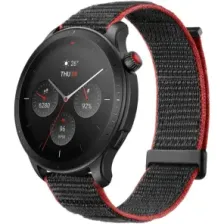
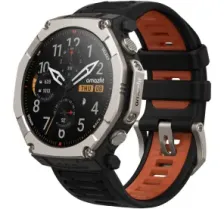
Amazfit GTR 4Heart-rate tracking3.5 of 51,108 ratings
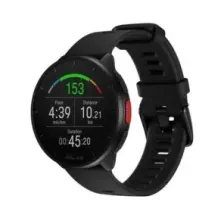
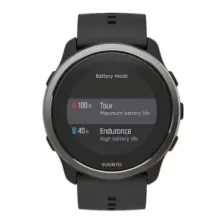
Suunto Race SHeart rate accuracy2.5 of 51,143 ratings
How to compare heart rate tracking
Three different test conditions
At rest
During exercise
Overnight
A result in one setting does not establish performance in the others. Heart-rate variability (HRV) is a separate result.
119 devices list heart-rate measurement in the maker’s specifications.
Reading definitions
Heart rate
An optical sensor reads the pulse through the skin, day and night.
Night heart rate
The same optical sensor, read overnight, where the signal is steadiest.
Heart-rate variability
The gaps between beats, read overnight and compared with your own baseline.
The makers · 33 promises on 21 devices
What makers promise about heart rate
Each maker’s own line about the reading, as its page read — kept as a fact with its date, never graded.
Every promise · 33
Coros Vertix 2: “Advanced health functions such as wrist heart rate measurement, pulse oximeter and sleep monitoring” · coros.com · as its listing read on 21 June 2026
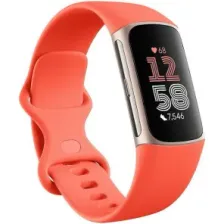
Fitbit Charge 6: “Fitbit's most accurate heart rate on a tracker yet” · store.google.com · as its listing read on 18 October 2026
Fitbit Charge 6: “See your heart rate in real time when you link Charge 6 to your favorite compatible exercise machines” · store.google.com · as its listing read on 18 October 2026
Fitbit Charge 6: “up to 60% more accurate during vigorous activities like HIIT” · store.google.com · as its listing read on 18 October 2026
Fitbit Inspire 3: “Designed with 24/7 continuous heart-rate monitoring” · store.google.com · as its listing read on 18 October 2026
Fitbit Inspire 3: “notify you if you're experiencing irregular heartbeats or if your heart rate is too low or too high” · store.google.com · as its listing read on 18 October 2026
Fitbit Sense 2: “Track key health metrics like blood oxygen (SpO2) & heart rate variability” · store.google.com · as its listing read on 18 October 2026
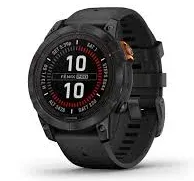
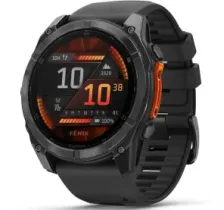
Garmin Fenix 7 Pro Sapphire Solar: “24/7 health and wellness monitoring with advanced sleep tracking, HRV status, Pulse Ox and more” · ph.garmin.com · as its listing read on 18 October 2026
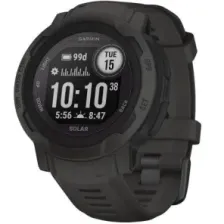
Garmin Instinct 2 Solar: “All‐day health monitoring tracks energy levels, stress, sleep, and Pulse Ox where available” · as its listing read on 18 October 2026
Polar Grit X2: “Up to 10 days when used in watch mode with Continuous heart rate tracking and phone notifications turned on” · support.polar.com · as its page read on 21 August 2026
Polar Grit X2: “Up to 43 hours continuous training with dual-frequency GPS and optical heart rate” · support.polar.com · as its page read on 21 August 2026
Polar Grit X2 Pro: “Up to 10 days when used in watch mode with Continuous heart rate tracking and phone notifications turned on” · support.polar.com · as its page read on 19 July 2026
Polar Grit X2 Pro: “Up to 43 hours continuous training with dual-frequency GPS and optical heart rate” · support.polar.com · as its page read on 19 July 2026
Polar Ignite 3: “up to 21 hours continuous training with dual-frequency GPS (better accuracy) and optical heart rate” · support.polar.com · as its page read on 26 July 2026
Polar Ignite 3: “up to 30 hours continuous training with single-frequency GPS (power save) and optical heart rate” · support.polar.com · as its page read on 26 July 2026
Polar Ignite 3: “up to 5 days of activity tracking with Continuous heart rate tracking and phone notifications turned on” · support.polar.com · as its page read on 26 July 2026
Polar Pacer Pro: “Battery life up to 35 h in training mode (GPS and wrist-based heart rate) or up to 7 days in watch mode with continuous heart rate tracking” · support.polar.com · as its page read on 1 October 2026
Polar Vantage V3: “Up to 10 days when used in watch mode with Continuous heart rate tracking and phone notifications turned on” · support.polar.com · as its page read on 18 July 2026
Polar Vantage V3: “Up to 43 hours continuous training with dual-frequency GPS and optical heart rate” · support.polar.com · as its page read on 18 July 2026
Samsung Galaxy Ring: “Monitor your heart health with improved Heart Rate Tracking” · samsung.com · as its page read on 21 July 2026
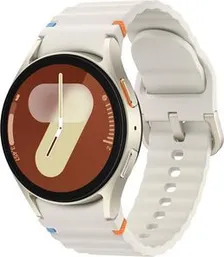
Samsung Galaxy Watch 7: “Energy Score with Galaxy AI calculates your physical readiness based on yesterday's sleep, heart rate and steps” · as its listing read on 25 June 2026
Samsung Galaxy Watch 7: “Heart Rate Tracking with Galaxy AI filters out the physical movements of your body during your workout for more precise readings” · as its listing read on 25 June 2026
Samsung Galaxy Watch 7: “Wellness Tips give you actionable suggestions tailored to your individual needs, such as feedback on your sleep cycle, your activity level and your resting heart rate” · as its listing read on 25 June 2026
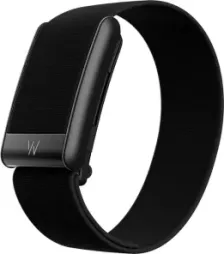
WHOOP 5.0: “tracks key metrics such as heart rate, heart rate variability, sleep quality, VO2 max, and menstrual cycle data” · as its listing read on 26 June 2026
Withings ScanWatch Nova: “you can see your heart rate, a pedometer, or notifications from your smartphone” · as its listing read on 23 June 2026
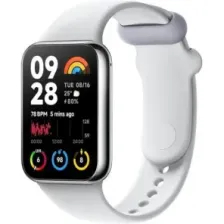
Xiaomi Smart Band 9 Pro: “monitors various health metrics such as heart rate, blood oxygen saturation, and sleep quality” · mi.com · as its listing read on 25 August 2026
Published tests of heart rate tracking
Look closer at the results and the watches used. Tests of older models stay with those models.
Explore the published tests · 10 figures on nine devices
Heart rate
six figures on six devices
Fitbit Charge 6Pulse error about 4.5 bpm across rest, stress and walkingPeer-reviewed study17 February 2026
Across rest, cognitive stress and walking in 10–36°C chambers, median mean absolute error was 4.5 bpm (IQR 3.5–5.0), median MAPE 5.5%, concordance 0.93 against Zephyr BioHarness ECG.
Sample
10 test sessions per device across participants; 45 healthy adults in the overall study
Short activity phases, treadmill walking at 6 km/h, no running or outdoor test; skin tone not recorded; university funded.
Amazfit Helio RingThe one ring that tracked the watches in workouts; peaks read lowPublished test20 October 2024
Workout averages of 148, 103, 123, 103 and 150 beats a minute against 152, 100, 123, 98 and 151 on the Garmin — the one ring in the test that tracked the watches; peaks still read low
Sample
one runner, one run and four gym sessions; a Garmin Venu 3 and a Pixel Watch 3 on the wrists as the reference
Oura Ring Gen 4Workout pulse far under two watches; the gap grew with effortPublished test20 October 2024
Workout averages of 139, 109, 116, 102 and 95 beats a minute where the Garmin read 152, 100, 123, 98 and 151 — the gap grew with effort, to 60 or 70 beats in the last session
Sample
one runner, one run and four gym sessions; a Garmin Venu 3 and a Pixel Watch 3 on the wrists as the reference
worn on the ring finger, a size loose, because the index finger was taken; the author gives it a tentative pass
Samsung Galaxy RingUnder 150 a minute through a race where two watches read 170Published test20 October 2024
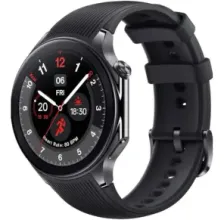
Under 150 beats a minute on average through a Spartan race where a Pixel Watch 2 and a OnePlus Watch 2 read 170 and 169, and the race was split into two activities
Sample
one runner, one Spartan race, two wrist watches as the reference (Nicholas Sutrich’s review test)
Nightly summaries, not beat-by-beat or exercise accuracy; AFRL funded; no competing interests declared.
Oura Ring, 2019 hardware (the paper does not name the generation; the Gen 3 of 2021 did not exist yet)Night pulse within a beat of a chest ECGPeer-reviewed study18 January 2022Earlier model · context only
Night heart rate within a beat of a chest ECG: correlation 0.99 in five-minute windows, mean bias −0.44 beats per minute
Related catalogue entries: Oura Ring Gen 4. This result does not establish their performance.
Sample
35 healthy adults, one night at home against a Shimmer3 ECG
Tested on
the Oura Ring, 2019 hardware (the paper does not name the generation; the Gen 3 of 2021 did not exist yet) — The Gen 4 moved the sensors into the band. These figures describe the 2019 hardware, not the Gen 4.
WHOOP weights parts of sleep differently from the full-night ECG reference; nightly summaries only; AFRL funded.
Heart-rate variability
one figure on one device
Oura Ring, 2019 hardware (the paper does not name the generation)Night HRV tracks a chest ECG closely, reading about 15 ms lowPeer-reviewed study18 January 2022Earlier model · context only
Night HRV (RMSSD) correlated 0.92 with a chest ECG in five-minute windows and 0.96 per night, reading about 15 ms low
Related catalogue entries: Oura Ring Gen 4. This result does not establish their performance.
Sample
35 healthy adults, one night at home against a Shimmer3 ECG
Tested on
the Oura Ring, 2019 hardware (the paper does not name the generation) — The Gen 4 moved the sensors into the band. These figures describe the 2019 hardware, not the Gen 4.
No. The overall list ranks general reputation using human channels; the category lists also include available AI recommendations. Both are filtered by recorded capability. Only a relevant test can supply evidence about measurement performance.
Why can a listed device have no place?
Its maker has recorded the feature, but our sources do not meet the ranking’s minimum evidence requirement. Missing evidence is not evidence of poor performance.
Why are the overall and category places different?
The overall ranking compares human channels in one pool across categories. Category places compare devices within their type and also include the AI panel. Feature filters keep those original places, so gaps are intentional.