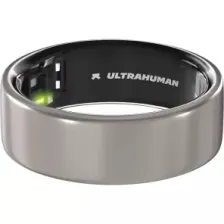
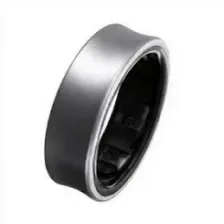
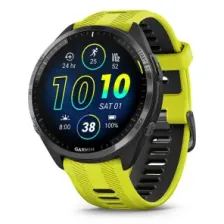
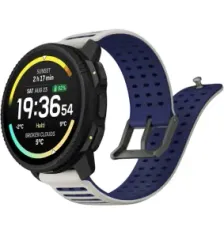
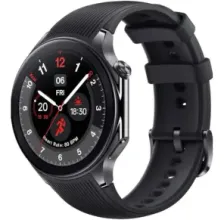
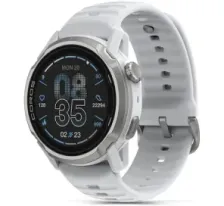
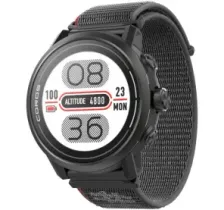
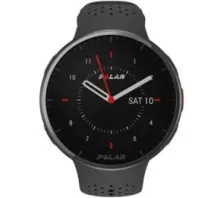
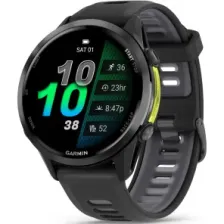
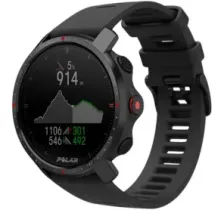
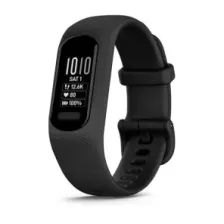
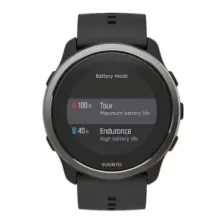
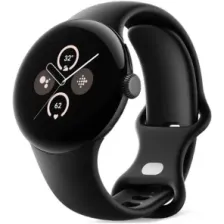
Choose a type to see its models. Counts include models without a ranking place.
The ranking · 111 devices
Sleep trackers by type
The number beside a model is its place among all ranked devices of its type, including those without this feature. Open a model for its sources, costs and history.
Feature descriptions still missing: Garmin Forerunner 170, WHOOP 4.0 and Withings ScanWatch Nova — they list sleep, and we have not recorded their makers’ explanations yet.
Across categories · 53 ranked in this comparison
Overall ranking: devices listed for sleep
Places come from the overall ranking and can have gaps. Open a model for its feature sources.
Scroll across for source details.
General reputation across categories · human channels only
Movement and heart rate together predict when you are asleep, and the tiny changes between beats — heart-rate variability — separate light, deep and REM.
It needs at least twenty minutes of sleep to name a stage, so a short night comes back without them.
The watch detects sleep on its own and watches your movement through the hours you have named as your night; it comes back with total hours, stages, movement and a score.
Naps count towards the statistics. Garmin does not say which signals separate one stage from another.
The watch detects sleep on its own and watches your movement through the hours you have named as your night; it comes back with total hours, stages, movement and a score.
Naps count towards the statistics. Garmin does not say which signals separate one stage from another.
The watch detects sleep on its own and watches your movement through the hours you have named as your night; it comes back with total hours, stages, movement and a score.
Naps count towards the statistics. Garmin does not say which signals separate one stage from another.
The watch detects sleep on its own and watches your movement through the hours you have named as your night; it comes back with total hours, stages, movement and a score.
Naps count towards the statistics. Garmin does not say which signals separate one stage from another.
The watch detects sleep on its own and watches your movement through the hours you have named as your night; it comes back with total hours, stages, movement and a score.
Naps count towards the statistics. Garmin does not say which signals separate one stage from another.
A 3D acceleration sensor records the movement of your non-dominant hand while the optical sensor records the gaps between beats; the two together name light, deep and REM.
Continuous heart-rate tracking has to be on, and the band tight enough that the sensor never leaves the skin.
The watch detects sleep on its own and watches your movement through the hours you have named as your night; it comes back with total hours, stages, movement and a score.
Naps count towards the statistics. Garmin does not say which signals separate one stage from another.
The watch detects sleep on its own and watches your movement through the hours you have named as your night; it comes back with total hours, stages, movement and a score.
Naps count towards the statistics. Garmin does not say which signals separate one stage from another.
A 3D acceleration sensor records the movement of your non-dominant hand while the optical sensor records the gaps between beats; the two together name light, deep and REM.
Continuous heart-rate tracking has to be on, and the band tight enough that the sensor never leaves the skin.
Movement and heart rate together predict when you are asleep, and the tiny changes between beats — heart-rate variability — separate light, deep and REM.
It needs at least twenty minutes of sleep to name a stage, so a short night comes back without them.
A 3D acceleration sensor records the movement of your non-dominant hand while the optical sensor records the gaps between beats; the two together name light, deep and REM.
Continuous heart-rate tracking has to be on, and the band tight enough that the sensor never leaves the skin.
PPG, a three-axis accelerometer and a three-axis gyroscope feed one algorithm; heart rate, its variability and breathing rate separate light, deep and REM.
WHOOP trained the staging against overnight polysomnography in a sleep lab and keeps the algorithm itself private.
Movement and heart rate together predict when you are asleep, and the tiny changes between beats — heart-rate variability — separate light, deep and REM.
It needs at least twenty minutes of sleep to name a stage, so a short night comes back without them.
Movement, skin temperature, resting heart rate, its variability and breathing rate together name the stage — breathing slows in light sleep, movement all but stops in deep.
Oura puts its staging at 79% agreement with a polysomnography sleep lab.
Movement and heart rate together predict when you are asleep, and the tiny changes between beats — heart-rate variability — separate light, deep and REM.
It needs at least twenty minutes of sleep to name a stage, so a short night comes back without them.
Wear it to bed and it reads wrist movement and heart rate — the heartbeat is how it knows the watch is on you at all — and the night comes back as light, deep and REM.
Withings: it takes 15 to 25 minutes of near-stillness before sleep is detected, and an hour with a book comes close enough to those criteria to be logged as sleep.
Movement and heart rate together predict when you are asleep, and the tiny changes between beats — heart-rate variability — separate light, deep and REM.
It needs at least twenty minutes of sleep to name a stage, so a short night comes back without them.
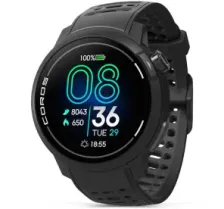
The watch tracks sleep around the clock and leans on the heart-rate sensor to do it; the first stretch longer than three hours gets a score and a breakdown, anything else that day is a nap.
COROS asks for the watch snug and at least 2 cm above the wrist bone, because the staging rides on heart-rate data.
The watch detects sleep on its own and watches your movement through the hours you have named as your night; it comes back with total hours, stages, movement and a score.
Naps count towards the statistics. Garmin does not say which signals separate one stage from another.
The watch detects sleep on its own and watches your movement through the hours you have named as your night; it comes back with total hours, stages, movement and a score.
Naps count towards the statistics. Garmin does not say which signals separate one stage from another.
Movement, skin temperature, resting heart rate, its variability and breathing rate together name the stage — breathing slows in light sleep, movement all but stops in deep.
Oura puts its staging at 79% agreement with a polysomnography sleep lab.
A 3D acceleration sensor records the movement of your non-dominant hand while the optical sensor records the gaps between beats; the two together name light, deep and REM.
Continuous heart-rate tracking has to be on, and the band tight enough that the sensor never leaves the skin.
Start with the short answer, then open the comparison and sources.
What do a sleep score and a readiness score mean?
A sleep score summarizes the previous night; readiness describes recovery relative to your own baseline.
Neither is a percentage of measurement accuracy, and a score of 80 from one app is not directly comparable with 80 from another.
Apple sleep score · 100 points
Duration contributes up to 50 points, bedtime consistency up to 30, interruptions up to 20. This is a weighted summary of sleep habits and the night, not a diagnosis.
Current guidance uses sleep duration, time to sound sleep and sound sleep, with personalized targets. Older explanations of a fixed 50/25/25 split describe a different calculation; check the version shown in your app.
Compares recovery signals with your own baseline. Initial readiness requires seven nights; most nightly metrics need at least three hours of sleep. A high sleep score alone does not guarantee high readiness.
Which sleep trackers avoid a required subscription?
Compare included sleep features as well as fees.
“Optional plan” can still mean that detailed insights cost extra. Oura’s free scores do not include the same detail as membership. These category comparisons list model-specific terms.
The saved tests do not establish a universal winner.
Sleep duration, waking detection and individual stages are different outcomes; a strong result for one does not establish the others. Compare the tested model, reference method, sample and study conditions in the test table. An older generation’s test remains labeled as older evidence.
Sleep time and sleep stages are separate results in our test records. Compare the same outcome and the exact model tested before drawing a conclusion.
111Estimates itWorked out from another signal — motion, pulse, the shape of a wave — by a formula, not read directly.
Reading definitions
Sleep stages
Motion, pulse and breathing overnight name the stage; a sleep lab uses brain waves.
Sleep time
When you fell asleep and when you woke, from movement and pulse.
The makers · 29 promises on 21 devices
What makers promise about sleep
Each maker’s own line about the reading, as its page read — kept as a fact with its date, never graded.
Every promise · 29
Coros Vertix 2: “Advanced health functions such as wrist heart rate measurement, pulse oximeter and sleep monitoring” · coros.com · as its listing read on 21 June 2026
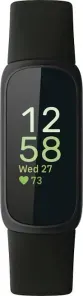
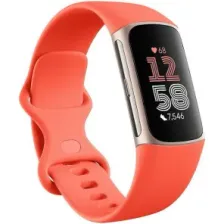
Fitbit Inspire 3: “track steps, distance covered, calories burned, sleep score, menstrual phase, and blood oxygen levels” · store.google.com · as its listing read on 18 October 2026
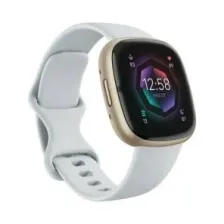
Fitbit Sense 2: “designed to help you stress less, sleep better & live healthier” · store.google.com · as its listing read on 18 October 2026
Fitbit Sense 2: “Learn how to maximize rest with tools that track your sleep quality” · store.google.com · as its listing read on 18 October 2026
Fitbit Sense 2: “see a personalized analysis of your sleep each month” · store.google.com · as its listing read on 18 October 2026
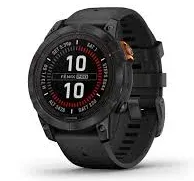
Garmin Fenix 7 Pro Sapphire Solar: “24/7 health and wellness monitoring with advanced sleep tracking, HRV status, Pulse Ox and more” · ph.garmin.com · as its listing read on 18 October 2026
Garmin Forerunner 165: “Track your sleep with the sleep coach, stress, calories, and daily movement” · ph.garmin.com · as its listing read on 18 October 2026
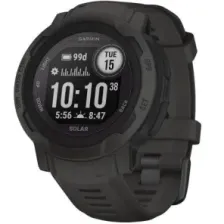
Garmin Instinct 2 Solar: “All‐day health monitoring tracks energy levels, stress, sleep, and Pulse Ox where available” · as its listing read on 18 October 2026
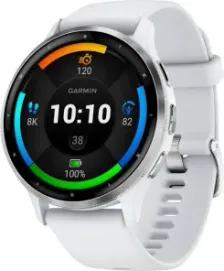
Garmin Venu 3: “Get a sleep score and personalized coaching for how much sleep you need” · ph.garmin.com · as its page read on 18 July 2026
Garmin Venu 4: “personalized sleep metrics, including the sleep alignment feature to understand if you're in sync with your internal cycle” · as its listing read on 25 June 2026
Garmin Vivoactive 6: “Body energy monitoring helps you keep your energy levels in check with personalized insights based on sleep, naps, stress, workouts and more” · ph.garmin.com · as its listing read on 23 August 2026
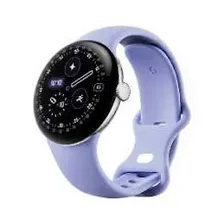
Google Pixel Watch 4: “Tracks various health metrics while offering real-time guidance for workouts and sleep insights” · as its listing read on 26 June 2026
Oura Ring Gen 4: “Get personalized insights into your sleep, activity, readiness, stress, heart health, metabolic health, women's health and more” · ouraring.com · as its listing read on 18 October 2026
Samsung Galaxy Ring: “Get regular readings on skin temperature changes while you sleep” · samsung.com · as its page read on 21 July 2026
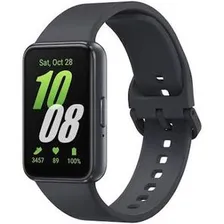
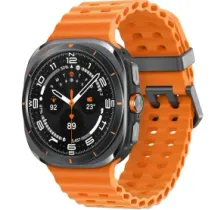
Samsung Galaxy Watch 7: “Energy Score with Galaxy AI calculates your physical readiness based on yesterday's sleep, heart rate and steps” · as its listing read on 25 June 2026
Samsung Galaxy Watch 7: “Wellness Tips give you actionable suggestions tailored to your individual needs, such as feedback on your sleep cycle, your activity level and your resting heart rate” · as its listing read on 25 June 2026
Samsung Galaxy Watch 8: “Analyses three nights of sleep data to determine your ideal bedtime” · as its listing read on 26 June 2026
Samsung Galaxy Watch 8: “Monitors vascular load as you sleep” · as its listing read on 26 June 2026
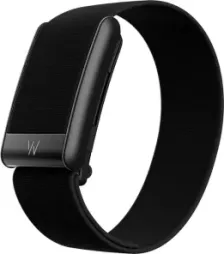
WHOOP 5.0: “personalized recommendations for sleep, strain, and recovery” · as its listing read on 26 June 2026
WHOOP 5.0: “tracks key metrics such as heart rate, heart rate variability, sleep quality, VO2 max, and menstrual cycle data” · as its listing read on 26 June 2026
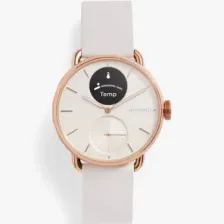
Withings ScanWatch 2: “Our most advanced activity and sleep tracking yet, ensures every workout and rest is monitored with unmatched precision” · withings.com · as its page read on 1 July 2026
Withings ScanWatch 2: “Overnight temperature tracking brings awareness to every phase—even irregular ones—which may help you understand how your hormones influence sleep, stress, and overall wellness” · withings.com · as its page read on 1 July 2026
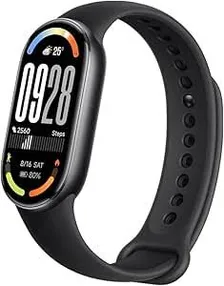
Xiaomi Smart Band 9 Pro: “monitors various health metrics such as heart rate, blood oxygen saturation, and sleep quality” · mi.com · as its listing read on 25 August 2026
What sleep tests found, and which model they tested
Look closer at the results and the watches used. Tests of older models stay with those models.
Explore the published tests · eight figures on six devices
Sleep stages
seven figures on six devices
Fitbit Sense 2Asleep or awake right 91% of the time; the four stages right 71%Peer-reviewed study10 October 2024
Asleep or awake right for 91% of 30-second epochs against polysomnography (kappa 0.52); the four sleep stages right for 70.9% (kappa 0.55)
study funded by Oura (disclosed); healthy sleepers only, a single night
Fitbit Sense 2The four stages right 65% of the time — best of the five wearablesPeer-reviewed study2 November 2023
Four-stage agreement with polysomnography: accuracy 0.65, Cohen kappa 0.42 (moderate), macro F1 0.58 — the best of the five wrist and finger wearables in the study
Sample
26 participants on the Sense 2, two Korean sleep centres
the authors work for Asleep, maker of the best-scoring tracker in the study (disclosed)
Google Pixel Watch, first generationThe four stages right 64% of the time among 11 trackersPeer-reviewed study2 November 2023Earlier model · context only
Four-stage agreement with polysomnography: accuracy 0.64, Cohen kappa 0.40 (moderate), macro F1 0.57 among 11 consumer sleep trackers
Related catalogue entries: Google Pixel Watch 2. This result does not establish their performance.
Sample
30 participants on the watch, two Korean sleep centres
Tested on
the Google Pixel Watch, first generation — one generation earlier
the authors work for Asleep, maker of the best-scoring tracker in the study (disclosed)
Oura Ring Gen3, Sleep Staging Algorithm 2.0Asleep or awake right 92% of the time; the four stages right 76%Peer-reviewed study10 October 2024Earlier model · context only
Asleep or awake right for 92.0% of 30-second epochs against polysomnography (kappa 0.60); the four sleep stages right for 76.3% (kappa 0.65)
Related catalogue entries: Oura Ring Gen 4. This result does not establish their performance.
Sample
35 healthy adults, one night of polysomnography
Tested on
the Oura Ring Gen3, Sleep Staging Algorithm 2.0 — one generation earlier; the Gen 4 moved the sensors into the band and no lab has tested it yet
30-second epochs; one PSG scorer; mixed healthy/suspected-apnea sample; not a diagnostic validation.
Sleep time
one figure on one device
WHOOP 4.0About 24 minutes more sleep on average; individual errors variedPeer-reviewed study22 March 2025
Total sleep time was 24.46 minutes longer than polysomnography on average; mean absolute error 50.31 minutes, with 95% limits of agreement from −101.09 to +150.01 minutes.
Sample
40 successful WHOOP 4.0 nights; 5 failed/partial; 62 adults overall, one lab night each
Mixed healthy participants and patients with suspected sleep apnea; only the PSG lights-out window was validated; VLAIO funded.
From the search box
Questions worth asking
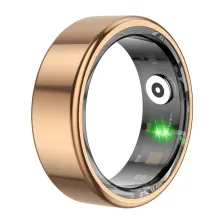
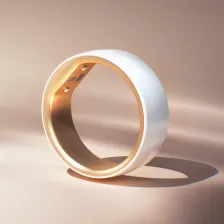
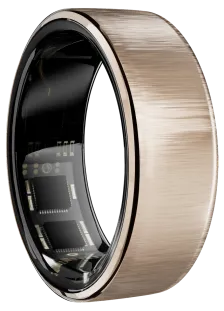
How accurate is smart ring sleep tracking?
The test registry gives the recorded result, sample and exact generation tested. Sleep time and stage agreement are different outcomes, and a study on an earlier generation does not establish the accuracy of its successor.
Does first place mean the most accurate sleep tracking?
No. These are general reputation rankings, overall and by type, filtered to devices with a recorded sleep feature. It is not an order of sleep accuracy. The studies below used different models, samples and conditions.
Which wearable is most accurate for sleep tracking?
The tests block lists every device a named study has tested, lab studies first — a list, not a ranking: the studies used different nights, different samples and different generations, so no single number orders them. The rankings at the top filter general reputation to devices with a recorded sleep feature.